
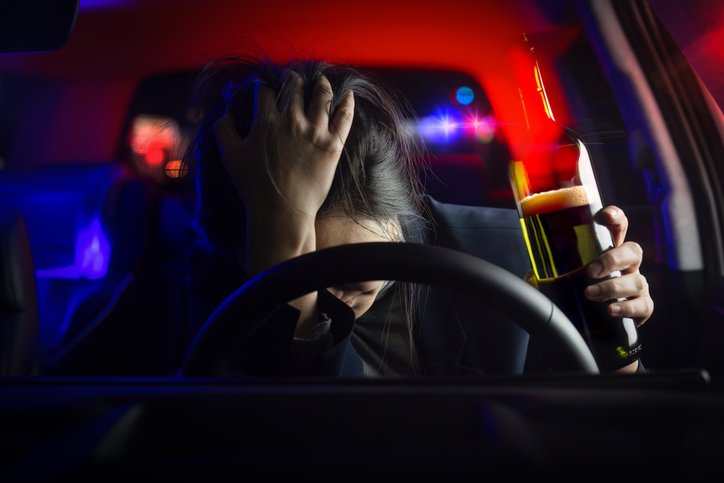
Drunk driving remains one of the most serious and costly criminal charges a person can face in the United States. Every year, hundreds of thousands of Americans are arrested for driving under the influence, and the consequences — license suspension, steep fines, jail time, and a permanent criminal record — can follow them for years. Understanding where DUIs are most prevalent, why certain states see higher rates, and what your legal options are if you’re charged could make all the difference.
According to the FBI Uniform Crime Reporting Program, approximately 804,926 Americans were arrested for suspected DUI in 2024 — representing 11% of all arrests nationwide. While that number reflects a gradual decline from over a million annual arrests a decade ago, it remains a staggering figure. And in many states, the problem is far worse than the national average suggests.
What Is a DUI — And Why Does It Matter?
DUI stands for “Driving Under the Influence.” Depending on the state, you may also see it referred to as DWI (Driving While Intoxicated), OWI (Operating While Impaired), or OUI (Operating Under the Influence). In every state, it is illegal to operate a motor vehicle with a blood alcohol concentration (BAC) of 0.08% or higher. Some states have enacted stricter thresholds, and for commercial drivers or drivers under 21, the legal limit is even lower.
The stakes are high — not just for the driver, but for everyone sharing the road. According to the National Highway Traffic Safety Administration (NHTSA), drunk driving crashes drain $58 billion from the U.S. economy annually. In 2022 alone, 13,524 people were killed in alcohol-impaired driving crashes. That works out to roughly one death every 39 minutes.
Beyond the human cost, a DUI conviction carries serious legal penalties. Even for a first offense, drivers can face:
- License suspension or revocation
- Heavy fines and court fees
- Mandatory alcohol education or treatment programs
- Possible jail time
- Ignition interlock device (IID) requirements
- Significantly higher auto insurance premiums
Repeat offenders face escalating consequences, and some states classify multiple DUI offenses as felonies.
Which States See the Most DUIs?
The answer depends on whether you’re measuring total arrests or per capita arrest rates — and the results are quite different.
By Total Arrests: California Tops the List
When looking at sheer numbers, California reports the most DUI arrests of any state, with over 115,000 cases recorded in 2024. That’s not surprising given the state’s massive population and expansive highway systems. Texas and Florida also rank near the top in total arrests for similar reasons — large populations spread across vast road networks with limited public transit options in many areas.
However, raw numbers don’t tell the full story. A state with 40 million people will naturally record more arrests than a state with 600,000, even if the smaller state has a far more serious drunk driving problem per person.
By Per Capita Rate: Rural States Lead the Nation
When adjusted for population, the picture shifts dramatically — and the data consistently points to a cluster of rural, western, and midwestern states.
Wyoming leads the nation in DUI arrests per capita, with over 640 arrests per 100,000 residents in 2024. The state also ranks among the highest in the country for alcohol-impaired driving fatalities. Critics have long pointed to Wyoming’s lenient drunk driving laws and absence of sobriety checkpoints as contributing factors.
South Dakota is never far behind. Its DUI arrest rate reached approximately 876 arrests per 100,000 drivers in 2023, and alcohol-impaired crashes account for more than 27% of all road fatalities in the state.
North Dakota rounds out the top tier, with around 801 DUI arrests per 100,000 drivers in 2023 and nearly 36% of all road fatalities linked to alcohol impairment — one of the highest proportions in the country.
Montana recorded the highest overall DUI severity score in 2023 according to Zutobi’s U.S. DUI Report, factoring in both arrest rates and fatality rates. The state registered 8.08 DUI road fatalities per 100,000 drivers, and Mothers Against Drunk Driving (MADD) has repeatedly cited Montana as one of the most dangerously tolerant states for drunk driving offenders.
Mississippi also warrants mention: in 2023, its DUI arrest rate as a percentage of all arrests was the highest in the nation at 22.9% — meaning nearly one in four arrests in the state involved suspected drunk driving.
New Mexico rounds out the top tier for severity, with 7.72 DUI road fatalities per 100,000 drivers in 2023 and an ongoing problem with repeat offenders.
Why Rural States Dominate the Rankings
The pattern isn’t accidental. Research from the National Institutes of Health and insurance data consistently show that people in rural areas are significantly more likely to be arrested for DUI than those in urban or suburban areas — as much as 34–43% more likely, depending on the dataset. The reasons are interconnected:
- Limited public transportation: In rural areas, there are few alternatives to driving, even after drinking.
- Fewer ride-share options: Apps like Uber and Lyft have limited reach in sparsely populated regions.
- Longer distances: Bars, restaurants, and social gatherings may be miles from home, making impaired driving feel unavoidable to some.
- Cultural factors and enforcement patterns: Some rural areas have historically normalized drinking and driving, and enforcement resources may be stretched thin.
This rural-urban divide is one of the most consistent findings in DUI research, and it explains why states with large rural populations punch well above their weight when it comes to per capita DUI rates.
The Financial and Legal Cost of a DUI
Many people underestimate just how expensive a DUI arrest can be — even when it doesn’t result in a conviction. A first-time offense can easily cost a driver $10,000 or more when you account for:
- Bail and court fees
- Attorney fees
- Fines and penalties
- DMV reinstatement fees
- Mandatory alcohol education classes
- Ignition interlock device installation and monthly fees
- Increased insurance premiums (often doubling or tripling)
For repeat offenders or cases involving an accident, injury, or high BAC, costs climb dramatically higher. Some estimates place the total cost of a serious DUI at $30,000 or more when all associated expenses are factored in.
Beyond the financial impact, a DUI on your record can affect employment prospects, professional licenses, housing applications, and even child custody matters.
What to Do If You’re Charged with a DUI
Being arrested for a DUI is frightening — but an arrest is not a conviction. The steps you take immediately after being charged can have a major impact on the outcome of your case.
- Exercise your right to remain silent. You are not required to answer questions beyond providing your name and license. Anything you say can be used against you.
- Do not refuse a chemical test without understanding the consequences. Many states have implied consent laws that impose automatic license suspension for refusal — in some cases, harsher than a DUI conviction itself.
- Document everything. Note the time, location, officers involved, and anything you observed before, during, and after the stop.
- Request an administrative hearing promptly. In most states, you have a very short window (often just 10 days) to challenge your license suspension after a DUI arrest.
- Contact an experienced DUI defense attorney immediately. This is the single most important step you can take.
A skilled attorney can challenge the legality of the traffic stop, question the accuracy of field sobriety tests and breathalyzer results, negotiate for reduced charges, and in some cases, get charges dismissed entirely.
If you’re in Northern California, the top-rated DUI lawyer in Santa Rosa, CA at Conway Law Practice has the experience and local knowledge to mount an aggressive defense on your behalf.
DUI Laws Are Getting Stricter — And Enforcement Is Increasing
Public pressure, technology, and data have combined to push legislatures across the country toward tougher DUI laws. Several trends are reshaping how DUI cases are prosecuted:
Ignition Interlock Devices (IIDs) are increasingly being mandated even for first-time offenders. These devices require the driver to pass a breath test before the vehicle will start, and they log data that can be reviewed by courts and probation officers.
Lower BAC thresholds are being discussed at the federal level. Utah became the first state to lower the legal limit from 0.08% to 0.05%, and NHTSA has encouraged other states to follow suit.
Drugged driving enforcement is expanding. As cannabis becomes legal in more states, law enforcement agencies are developing new protocols to test for drug impairment at the roadside, and DUI laws in most states already cover both alcohol and drugs.
Enhanced penalties for high-BAC offenders have become standard in many states, with aggravated DUI charges applying to drivers with BAC levels above 0.15% or 0.16%.
Frequently Asked Questions About DUIs
What is the legal BAC limit in the United States?
In most states, the legal blood alcohol concentration (BAC) limit is 0.08% for drivers 21 and older. Commercial drivers face a stricter limit of 0.04%, and drivers under 21 are subject to zero-tolerance laws, typically set at 0.00%–0.02% depending on the state.
Which state has the highest DUI rate?
By per capita arrest rate, Wyoming consistently ranks at or near the top, with over 640 DUI arrests per 100,000 residents in 2024. By total arrests, California leads the nation due to its large population.
How long does a DUI stay on your record?
It varies significantly by state. In many states, a DUI remains on your driving record for 5–10 years and on your criminal record permanently unless expunged. Some states allow expungement after a waiting period; others do not.
Can a DUI be reduced or dismissed?
Yes, in certain circumstances. An experienced DUI attorney may be able to challenge the validity of the traffic stop, the accuracy of BAC testing equipment, or the procedures used during the arrest. Plea agreements to lesser charges such as “wet reckless” (reckless driving involving alcohol) are also possible in some jurisdictions.
What happens to your license after a DUI arrest?
In most states, your license can be administratively suspended even before your criminal case is resolved. You typically have a short window — often 10 days — to request a hearing to contest the suspension. An attorney can help you navigate this process.
Is a first-time DUI a felony or misdemeanor?
In most states, a first-time DUI with no aggravating factors is charged as a misdemeanor. However, certain circumstances — such as a very high BAC, a minor in the vehicle, or an accident resulting in injury or death — can elevate the charge to a felony.
Do I need a lawyer for a DUI charge?
Technically, no — but practically, yes. DUI law is complex, and the stakes are high. An attorney with local experience can identify weaknesses in the prosecution’s case, help you avoid the worst consequences, and guide you through a confusing process.
What is the cost of a DUI?
A first-time DUI can cost $10,000 or more when all fines, fees, legal costs, and insurance increases are added up. Cases involving accidents, injuries, or repeat offenses can exceed $30,000 in total financial impact.