
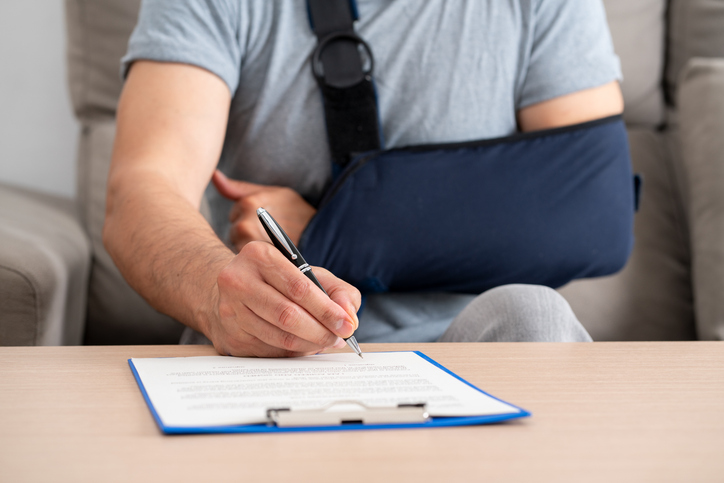
Every year, thousands of Oregonians are hurt in accidents they didn’t cause — a rear-end collision on I-205, a slip and fall outside a Pearl District restaurant, or a pedestrian knockdown near Powell Boulevard. Most of these victims have one thing in common: they don’t fully understand their rights before an insurance adjuster calls. That lack of knowledge costs them — often significantly.
Oregon’s Fault System and What It Means for Your Claim
Oregon operates under a modified comparative fault system, codified under ORS 31.600. This means that if you are found partially at fault for an accident, your compensation is reduced by your percentage of fault — and if you’re found 51% or more at fault, you recover nothing at all.
Insurance adjusters know this law well. They are trained to use it against you.
The Hidden Timeline: Oregon’s Statute of Limitations
Under ORS 12.110, most personal injury claims in Oregon must be filed within two years of the date of injury. Miss that window, and your right to compensation is almost certainly gone forever.
There are important exceptions. If the injury involved a government entity — like a TriMet bus or a city-owned vehicle — you may have as little as 180 days to file a formal tort claim notice under ORS 30.275. Many Portland accident victims are blindsided by this shortened timeline.
The Oregon State Bar recommends consulting with an attorney as soon as possible after an injury — not because you necessarily need to file suit immediately, but because evidence deteriorates, witnesses move on, and insurers begin building their defense from day one.
Portland’s Unique Road and Injury Landscape
Portland is one of the most active cycling and pedestrian cities in the United States. According to ODOT’s crash data, Multnomah County consistently ranks among the highest in the state for pedestrian and cyclist fatalities. The city’s mix of dense urban traffic, light rail crossings, and aging infrastructure creates conditions where serious injuries happen with unfortunate regularity.
Common personal injury claims in Portland include car and truck accidents on the I-84, I-5, and Highway 26 corridors; pedestrian accidents in the Lloyd District and along SE Division Street; bicycle accidents on the Springwater Corridor; premises liability claims involving wet floors or broken sidewalks; and rideshare accidents involving Uber and Lyft drivers on active duty. Each carries its own evidentiary requirements and legal nuances — a rideshare accident, for instance, triggers different insurance coverage depending on which operational “period” the driver was in at the time of the crash, per Oregon’s rideshare statute ORS 742.520.
What Insurance Companies Don’t Tell You
The Insurance Research Council has published findings showing that injury victims who hire attorneys receive settlements, on average, three to four times higher than those who handle claims on their own — even after attorney fees are deducted.
Insurance companies employ experienced adjusters whose entire job is to minimize payouts. They may offer a quick settlement in the days following an accident, before the full extent of your injuries is known. Accepting that offer almost always means signing a release that bars any future claims — even if you later discover you need surgery or that your injuries are permanent.
The American Bar Association notes that early settlement offers in personal injury cases are routinely undervalued, and that documented medical treatment, lost wage records, and expert testimony are key to maximizing recovery.
What to Do in the Days After an Injury in Portland
The steps you take immediately after an injury can make or break your claim.
Seek medical care immediately — even if you feel okay. Adrenaline masks pain, and conditions like traumatic brain injury or internal bleeding may not present symptoms for hours or days. Document the scene — photograph the location, your injuries, vehicle damage, and any hazardous conditions, and collect witness contact information. File a police report — in Oregon, a crash report is required under ORS 811.720 when there is injury or property damage exceeding $2,500. Avoid recorded statements to the other party’s insurer — you are not legally obligated to give one. Track every expense, from medical bills and prescriptions to lost wages.
Above all, before signing anything from an insurer, contact a personal injury lawyer in Portland who can evaluate the full value of your claim and protect your legal rights before it’s too late.
Understanding Damages Under Oregon Law
Oregon allows injured parties to recover both economic damages (medical bills, future care costs, lost income, property damage) and non-economic damages (pain and suffering, loss of enjoyment of life, emotional distress). Importantly, Oregon does not cap non-economic damages in most personal injury cases — a cap that previously existed was struck down by the Oregon Supreme Court in Busch v. McInnis Waste Systems (2020). This is a significant advantage for Oregon victims compared to states with rigid tort reform limits.
In cases involving extreme recklessness or intentional conduct, Oregon courts may also award punitive damages under ORS 31.730, though these require a heightened standard of proof.
The Role of Medical Documentation
One of the most common mistakes injury victims make is stopping medical treatment once they start to feel better — before a physician has formally documented the full extent of their injuries. Gaps in treatment give defense attorneys ammunition to argue that injuries were not serious. The American Academy of Orthopaedic Surgeons emphasizes the importance of follow-through care for creating a complete medical record that accurately reflects an injury’s impact on daily function, work capacity, and quality of life.
Final Thoughts
Oregon’s legal system gives injury victims meaningful rights — but those rights are only as strong as the steps you take to protect them. The insurance industry is a well-resourced adversary. The best way to level the playing field is to be informed, act quickly, and get qualified legal guidance before making any decisions that could affect your recovery for years to come.